SERVICES
PROCESSAUTOMATION
I remove repetitive manual steps, with rules and errors kept under control.
AI-generated image
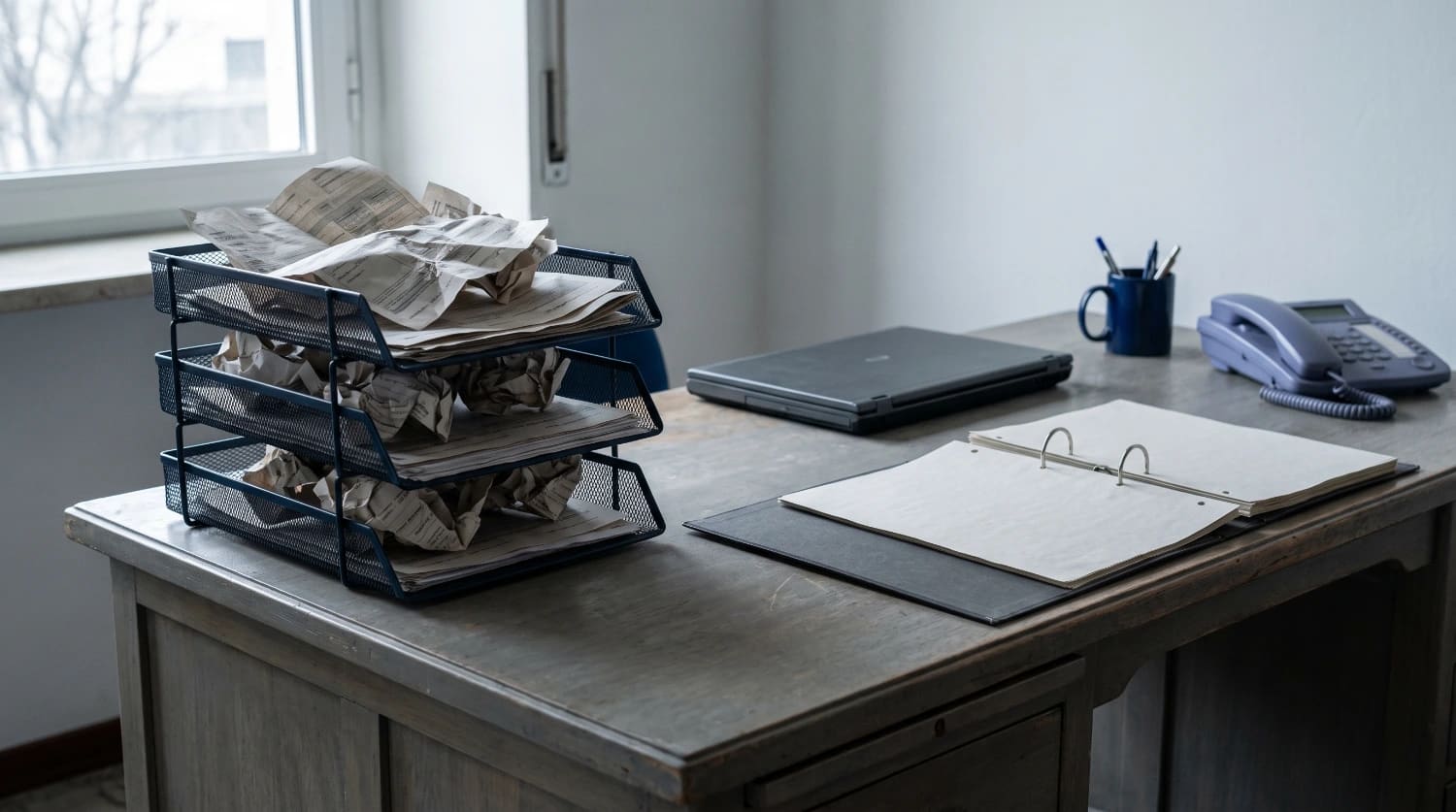
Quotes, client onboarding, chasing documents: the same steps get redone by hand every week. Every manual step is a place where time is lost or a mistake creeps in. The whole round only stands up because somebody remembers it.
WHAT YOU END UP WITH
- A map of the round as it runs today, step by step
- Rules and links between the tools you already use
- Handled errors, logs and alerts when something breaks
- Tests on the real process, not on sample data
- Instructions for whoever runs the system daily
HOW I BUILD IT
Understand the problem
I watch the process as it runs today: where it starts, who touches it, where it stops. Where it jams is almost never where it looks.
Define the perimeter
We pick the first step to automate, the exceptions to handle, and who stays responsible for the result.
Build
I connect the tools you already use and write the rules. With alerts and handled errors, not only the happy path.
Make it maintainable
I hand over logs you can read, working instructions, and a system the team uses without asking me.

AI-generated image
WHAT IT IS NOT
It is not an AI deciding for you, nor two tools taped together. Every automation has written rules and one owner for the result.
QUESTIONS
- Can we do this with no-code?
- Often yes. The tool follows the problem, the data and whoever has to use it. No-code is fine as long as it stays under control.
- How long does it take?
- Usually 2 to 6 weeks, depending on how many tools I connect. The real variable is you: how clear the data, the access and the answers are while I work.
- Does it need maintenance afterwards?
- If it depends on APIs or on data that changes, yes: at least light monitoring. There is no implied unlimited maintenance, it is quoted separately.
Tell me which process has jammed.
Let's talkWHAT IT COSTS
€1500 – €10,000
HOW LONG IT TAKES
2–6 weeks